The Chef Who Cut 80% of the Menu: Putu Agus Is Rewriting a 14-Year-Old Ubud Institution
The Bali-born, Lombok-raised chef came home from kitchens in Dubai and Abu Dhabi, met Toro's owner, and cut the sushi list from more than twenty varieties to six at one of Goutama's longest-standing Japanese restaurants. Here's why.
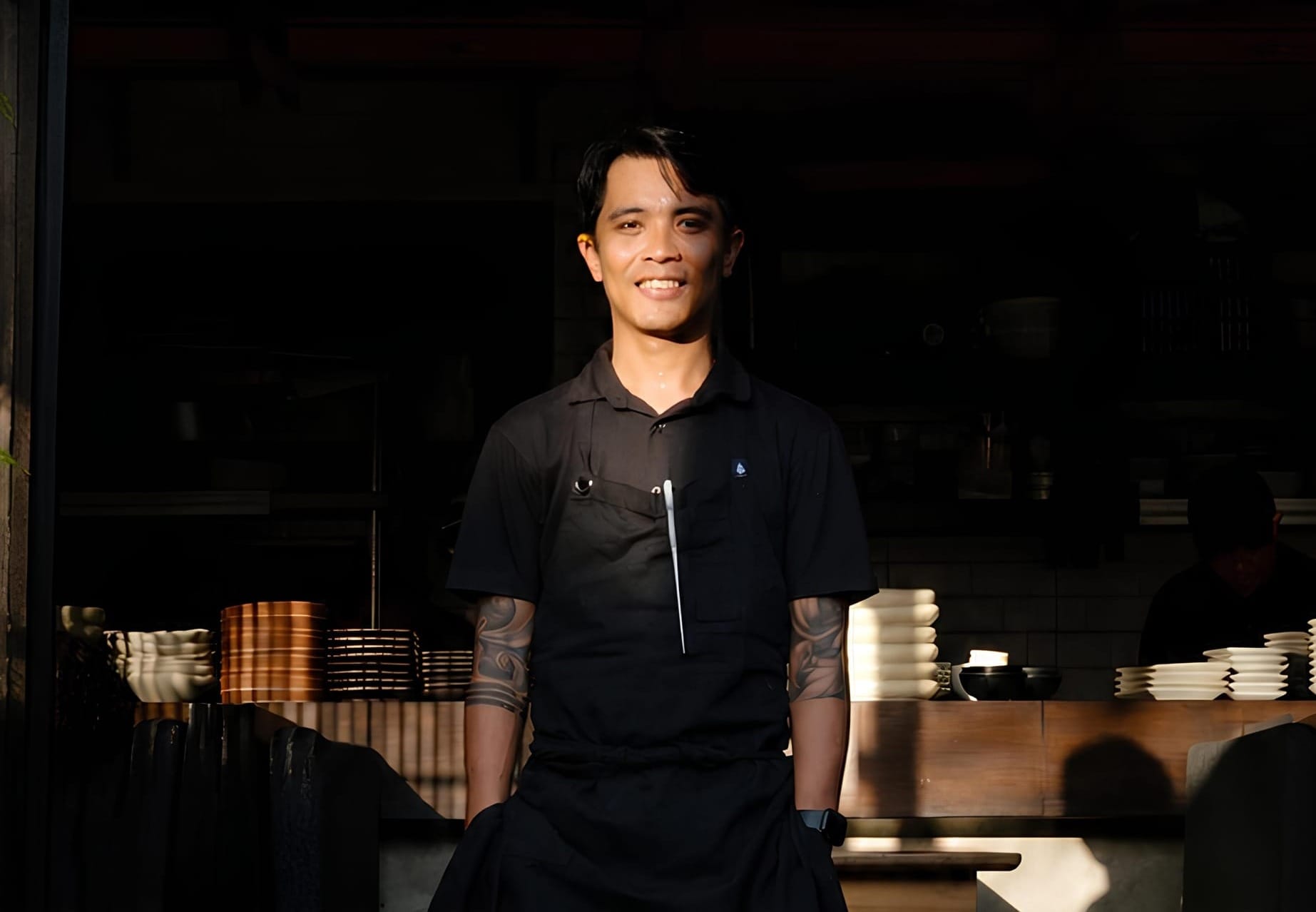
The Bali-born, Lombok-raised chef came home from kitchens in Dubai and Abu Dhabi, met Toro's owner, and cut the sushi list from more than twenty varieties to six at one of Goutama's longest-standing Japanese restaurants. Here's why.
We sat down with Putu Agus at Toro Dining, the Japanese restaurant that has held its corner near Ubud's Goutama strip for fourteen years, and the first thing he told us is that most people have it wrong. They think they know Toro. Another Japanese restaurant, another sushi list. That assumption is exactly what he was hired to dismantle.
"I'm Balinese. I was born in Bali, but I grew up in Lombok," he says by way of introduction, and the head chef title comes with a double load: Toro Dining and its sister venue Nagi Kitchen, two outlets ten minutes apart. He took over both in March this year. By the time we spoke, 80% of the menu was gone.
The long way home
Putu's professional career started in 2011, straight out of high school, juggling culinary school with a job at the Oberoi in Lombok. Then the passport filled up. Ritz-Carlton. Grand Hyatt. Cut by Wolfgang Puck. Kitchens in Saudi Arabia, Dubai and Abu Dhabi, and almost all of them with one thing in common.
"Most of the restaurants I worked at had an influence from Asia," he says. Japanese and Korean kitchens especially, where he found something that would shape everything he cooks now.
"It's different, but they have the respect for the ingredients. That makes me really want to dive deep into the technique."
That phrase, respect for the ingredients, comes up again and again with Putu. It is the closest thing he has to a philosophy, and it is the thread that connects a hotel kitchen in the Gulf to a charcoal grill in Ubud.
Not for the weak
Ask him about those years in big-name kitchens and he does not romanticise them. "In the kitchen, you need to be tough. It's very intense. It's very tiring, for sure. Sometimes people are desperate."
Then he grins.
"The more intense, the more adrenaline you have. Then you get more excited in the kitchen. I suggest the weak people not to work in the kitchen, for sure."
It takes sacrifice, he says, and determination. He clearly would not have it any other way.
Cutting a menu people loved
When Putu met Yande, Toro's owner, they agreed on something bold: after fourteen years, Toro needed to change. The restaurant opened in 2012 as a small sushi spot and built its reputation on it, more than twenty varieties on the list at its peak.
Putu cut it to six.
"We changed like 80% of the menu," he says. In place of the long sushi list came appetisers, a proper izakaya-style section, grilled dishes and salads. The food is still Japanese at its root, but the borders have opened.
"We do the grill with the technique of Japanese, and the flavour maybe something of Asian style. Mix and match, but still with the Japanese soul."
The result is a menu that reads wider than before. A prawn wonton that is Chinese at heart, finished with black vinegar and a Japanese hand. A smashed cucumber salad, that famous Chinese staple, dressed with tamari. And a beef kushiyaki that might be the most Putu dish on the list: inspired by the kebab, built sukune-style, layered tortilla and beef over and over. "Like a thousand layers of beef," he laughs.
What to order if it's your first time
Putu has a template for first-timers, and he walks us through it like a man setting a table in his head.
Start with snacks and a cocktail. The Toro Fried Chicken, TFC to the regulars, small bites in a crispy batter with spicy mayo. The prawn wonton. The beef kushiyaki. Then the smashed cucumber, then the sushi, which he is quick to point out has been upgraded, not abandoned.
And then the dish he is proudest of: the charcoal king prawn.
"The charcoal prawn is really representing the concept of Toro right now."
Fresh king prawn over the grill to bring out the sweetness, finished with a red kosho butter, the fermented chilli and citrus condiment from Japan whipped into something rich and silky, and a side of charred sweet corn. "Full of umami," he says. "Very simple, honest, comforting, but of course it's delicious. That really makes me proud of the dish."
To drink, he points to a coconut cocktail that has been on the list for a couple of years, served with a nori garnish. Refreshing on the palate, he says, the kind of drink that makes you want one more snack, and then another drink.
The restaurant he wants you to remember
Toward the end of our conversation, Putu stops us. "I have something I want to say, actually. I think this will be deep."
Fourteen years of regulars means fourteen years of assumptions, and the one that bothers him most is the idea that Toro is just another place to eat.
"Instead of that, I want them to experience the atmosphere. I want them to see the chef working in the kitchen. They listen to the operation. They see the rush in the open kitchen. I want them to stay a little bit longer."
For a chef, he admits, the job is technically to sell food. But that is not how he measures a good night.
"The complete experience is not only the food. It's with who you enjoy the food at the right moment. The goal is, if they can, happier than before they come."
Some tables are celebrations. Some are just dinner after a long day. If a guest wakes up the next morning a little happier, he says, "we really done our job."
His ambition for the restaurant itself is less philosophical and more direct: he wants Toro to be the busiest restaurant in Ubud. "We are a small restaurant, but we try to give a very nice experience. I want people to come back to Toro because they feel comfortable."
Fourteen years in, with six sushi where twenty used to be, it feels less like a restaurant changing its menu and more like a restaurant finally saying what it means.
Toro Dining is a Japanese izakaya-style restaurant by head chef Putu Agus, near the Goutama strip in Ubud, Bali. Expect charcoal-grilled dishes, an upgraded sushi list, and an open kitchen in full flight.
Frequently asked questions
Who is Putu Agus of Toro Dining?
Putu Agus is the Balinese head chef of Toro Dining and Nagi Kitchen in Ubud. Born in Bali and raised in Lombok, he began his career in 2011 at the Oberoi Lombok before working in kitchens abroad including Ritz-Carlton, Grand Hyatt and Cut by Wolfgang Puck, across Saudi Arabia, Dubai and Abu Dhabi. He took over Toro's kitchen in March 2026.
What is Toro Dining in Ubud?
Toro Dining is a Japanese restaurant near Ubud's Goutama strip, established in 2012 as a small sushi spot. Under head chef Putu Agus it has been reworked into an izakaya-style menu with charcoal-grilled dishes, appetisers and salads, keeping a tighter, upgraded sushi selection at its core.
How has Toro's menu changed?
Around 80% of the menu is new. The sushi list was cut from more than twenty varieties to six, making room for izakaya-style appetisers, grilled dishes and salads that combine Japanese technique with wider Asian flavours.
What should first-timers order at Toro?
Chef Putu recommends starting with snacks and a cocktail: the Toro Fried Chicken (TFC) with spicy mayo, the prawn wonton with black vinegar, and the beef kushiyaki layered like a kebab. Follow with the smashed cucumber salad, the sushi, and his signature charcoal king prawn with red kosho butter and charred sweet corn.
What is the signature dish at Toro Dining?
The charcoal king prawn: fresh king prawn grilled over charcoal for sweetness, finished with red kosho butter made from fermented chilli and citrus, served with charred sweet corn. Chef Putu calls it the dish that best represents Toro today: simple, honest and full of umami.
Featured venues get discovered here.
Work with us